For a long time, men’s wardrobes were built around a familiar set of accessories. A watch might carry the most personal significance, while a wedding band was often the only other piece of jewelry considered essential. Anything beyond those choices tended to be seen as an expression of individual taste rather than an ordinary part of getting dressed. That understanding has gradually changed. In contemporary menswear, jewelry has become a more considered element of personal style, with men paying greater attention to the details that make an outfit feel individual rather than simply well put together.
The change is not necessarily about wearing more accessories. It is often about choosing them with greater care. A distinctive ring, a chain with an interesting finish or a well-chosen silver bracelet can add character without dominating an outfit. The emphasis has shifted towards pieces that work naturally with existing clothes and remain appealing beyond a particular season. Men’s sterling silver bracelets fit comfortably into this approach, adding a personal detail without requiring an entirely different way of dressing.
This quieter direction in menswear is less about following a single fashion trend than developing a wardrobe that reflects individual preferences. Material, proportion and subtle details become more important, while an accessory’s appeal comes from how naturally it belongs to the person wearing it.
The Changing Role of Jewelry in Modern Menswear
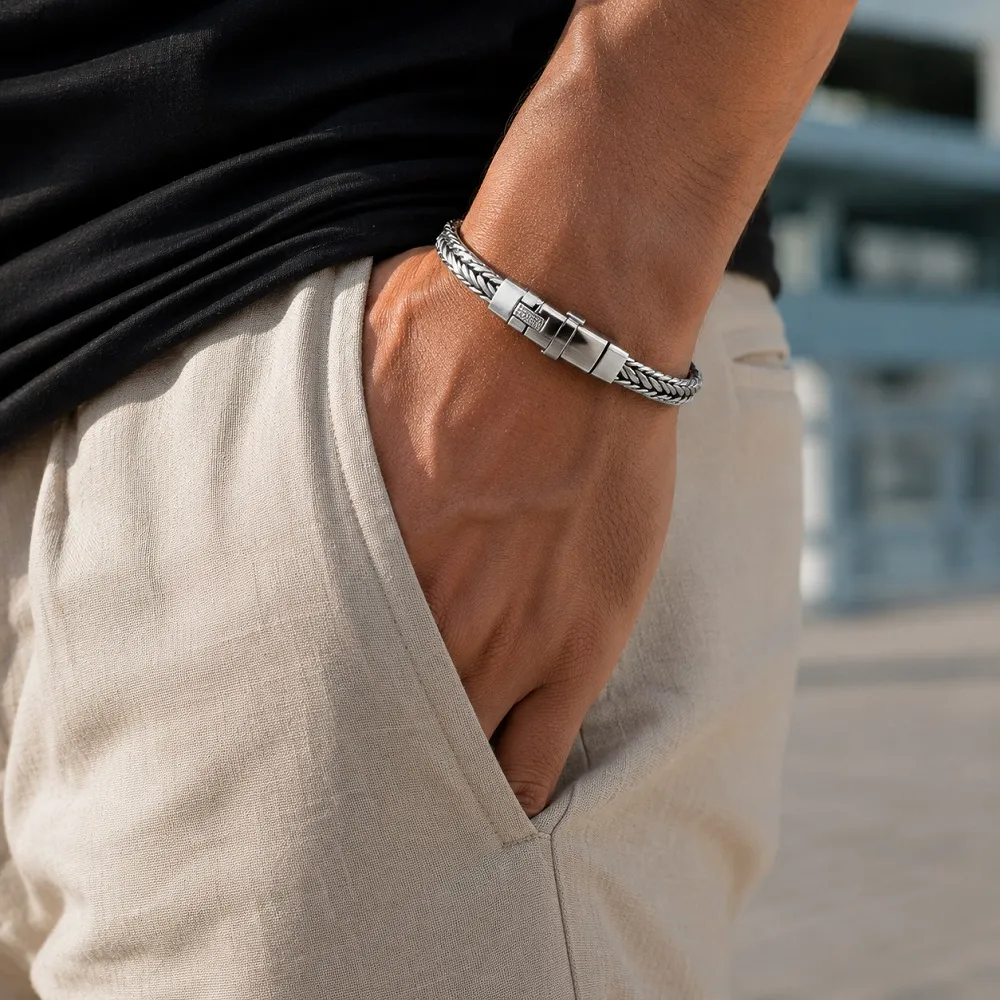
The boundaries around men’s jewelry are less rigid than they once were. Accessories previously associated with particular occasions or subcultures now appear across a wider range of looks, from relaxed everyday clothing to tailored outfits and contemporary formalwear. A bracelet no longer needs to be reserved for a holiday or special event; it can become part of a regular wardrobe in much the same way as a watch or a favourite pair of shoes.
Part of this change reflects a broader interest in self-expression. Clothing communicates taste, but accessories provide another level of detail. Two people can wear almost identical outfits and create quite different impressions through the watch, ring or bracelet they choose. These smaller objects often reveal something about how a person approaches design, craftsmanship and appearance.
A silver bracelet does not need to represent a particular lifestyle or make an obvious statement. It can simply be an object whose material and design are appreciated, much like a well-made watch or a carefully chosen leather accessory. This freedom has helped jewelry become a more natural part of modern dressing, particularly among men who prefer a few distinctive details to conspicuous branding.
There is also a difference between wearing jewelry to complete an outfit and choosing a piece that gradually becomes part of one’s identity. A bracelet worn regularly can become associated with everyday routines, workdays, journeys and social occasions. Over time, it may feel less like an accessory selected for a particular look and more like something that has earned a permanent place in the owner’s daily life.
Why Silver Has a Particular Place in a Personal Wardrobe
Silver occupies an interesting position in men’s style because it can appear both traditional and contemporary without requiring an elaborate design. Its cool, neutral tone works with many materials and colours commonly found in menswear, including denim, wool, cotton, leather and darker tailoring. Rather than relying on a strong colour or prominent decoration, silver often works through contrast and proportion.
Against navy, charcoal, black or olive, silver introduces a restrained brightness that can prevent an outfit from feeling too flat. With lighter fabrics, it provides definition without creating an overwhelming contrast. This flexibility allows silver jewelry to move between casual and more considered settings, provided the design suits the overall look.
The material also carries a sense of familiarity. Silver has a long history in jewelry and personal objects, yet it does not necessarily feel formal or ceremonial. A simple chain can look relaxed with an open shirt, while a more substantial bracelet may sit naturally beside a watch or beneath a knitwear sleeve. The same metal can communicate different moods depending on its finish, shape and scale.
For many men, this balance is more useful than choosing an accessory that immediately attracts attention. Jewelry becomes easier to wear when it does not require a complete change of wardrobe. Silver offers a way to introduce a personal detail while leaving the rest of an outfit largely untouched. Its appeal is not limited to minimalism, however; a sculptural or textured piece can still have considerable presence when the clothing around it is relatively simple.
Quiet Luxury Is About Selection, Not the Absence of Personality
The expression “quiet luxury” is often used to describe clothing that avoids prominent logos, exaggerated decoration and obvious displays of status. Its appeal has less to do with making everything plain than with paying closer attention to quality, proportion and the way individual pieces work together. A restrained outfit can still have considerable character when its fabrics, cut and accessories have been chosen with care.
Jewelry fits naturally into this approach because it allows a person to introduce detail without changing the overall silhouette. A silver bracelet with an interesting shape or surface can add depth to a simple combination of trousers, knitwear and a coat. It does not need to become the most noticeable element; its appeal may come from the way it catches the light when a sleeve moves or complements the texture of a leather watch strap.
There is an important distinction between understated design and anonymous design. A piece can be visually restrained while retaining a recognisable character through its proportions, surface or finish. The most successful accessories often occupy this middle ground: distinctive enough to feel personal, yet versatile enough to remain useful across different settings.
Quiet luxury should not be reduced to buying the simplest possible item. A plain bracelet may suit one person, while another may prefer a more detailed design that reflects an interest in traditional metalwork or sculptural forms. What matters is whether the object feels considered and belongs naturally within the wearer’s broader look. Personal taste cannot be measured by how little decoration a piece contains.
Material and Texture Make a Difference
In a photograph, an accessory is usually reduced to its shape, colour and surface reflection. In person, the experience is more complex. The way a material catches light, the contrast between smooth and textured areas, and the feel of an object in the hand all influence how it is perceived. Silver can look quite different in daylight, under indoor lighting and in the softer conditions of an evening setting.
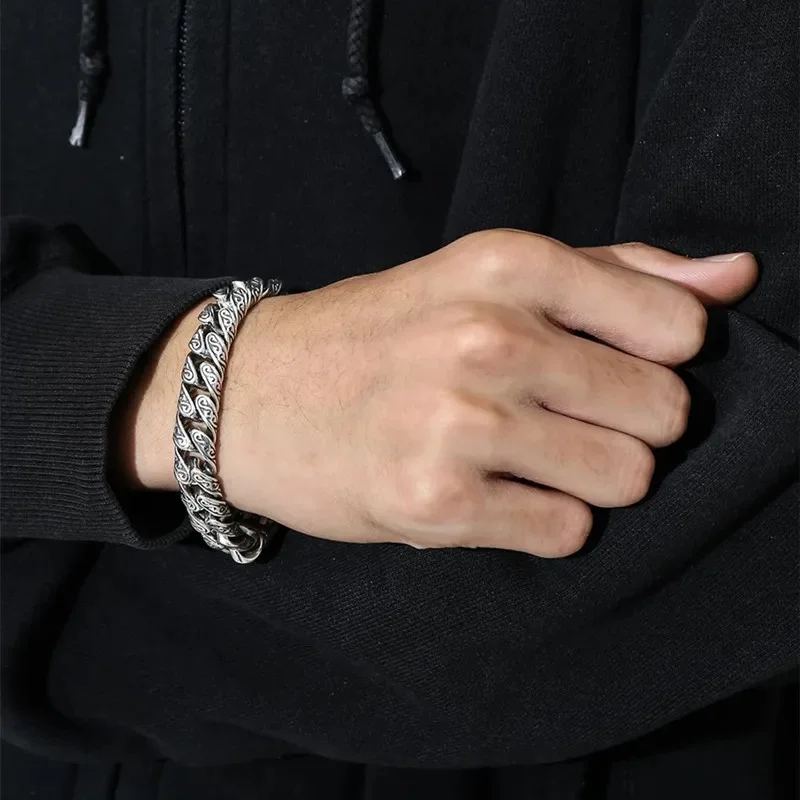
A highly polished surface creates clear reflections and gives jewelry a bright appearance. A brushed or frosted finish produces a quieter effect by scattering light rather than reflecting it directly. Carved and patterned surfaces introduce another dimension, with details becoming visible through changes in light and shadow. None of these approaches is inherently more refined than another; each creates a different relationship between the jewelry and the clothing around it.
Texture is especially interesting in contemporary menswear because everyday clothing already contains a variety of surfaces. Denim, knitwear, brushed cotton, wool and leather all have their own character, and a silver accessory can either complement those textures or introduce a deliberate contrast. A smooth bracelet beside a soft wool sleeve creates a different impression from a carved piece worn with a plain cotton shirt. These small differences can make an outfit feel individual without requiring a dramatic statement.
The same principle applies to craftsmanship. An accessory does not need elaborate decoration, but its finish should feel appropriate to its design. The consistency of its surface and the way it sits alongside other materials contribute to the overall impression. For someone who appreciates objects beyond their immediate appearance, these qualities can become as important as the design itself.
One Bracelet Can Work Across Different Wardrobes
A useful accessory should not depend on a single outfit to make sense. One advantage of a silver bracelet is that it can adapt to different ways of dressing without requiring a completely different styling approach each time. The same piece may look relaxed with denim and a T-shirt, more deliberate with a fine knit and tailored trousers, and quietly polished when worn with a jacket. Its versatility comes from the relationship between its design and the clothing around it.
With casual clothing, a bracelet can introduce a point of definition to an otherwise familiar combination. A simple shirt and jeans do not need several accessories to feel complete, but a carefully chosen piece of silver can add a personal element. The effect is often strongest when the bracelet remains visible without competing with too many other details.
In a more structured wardrobe, proportion becomes important. Sleeves and cuffs influence how much of a bracelet is visible, while the formality of the clothing may suggest a more restrained design. A slim or moderately sized silver piece can sit comfortably alongside tailored clothing, especially when its finish is not excessively reflective. Jewelry does not need to disappear in a formal setting, but it should feel consistent with the character of the clothes.
Travel offers another useful test of an accessory’s versatility. A wardrobe for several days away usually relies on a limited number of garments that can be combined in different ways. An accessory that works with most of those pieces provides a sense of continuity without requiring additional clothing or a separate styling plan. A silver bracelet may accompany a relaxed daytime outfit, a dinner shirt or a light jacket, making it a practical choice for someone who prefers to pack thoughtfully.
Wearing Jewelry with a Watch
For men who are new to bracelets, a watch is often the natural reference point. It is already familiar, usually worn every day and frequently chosen with attention to material and design. Adding a silver bracelet can extend that established look, but the relationship between the two pieces deserves some thought because both occupy the same part of the body.
Matching every detail is not necessary. A silver bracelet can sit beside a watch with a steel case, a leather strap or a darker finish, provided the combination feels intentional. What matters more is the balance between size, surface and visual weight. A large watch with a broad bracelet may create a crowded appearance, while a slimmer chain or less reflective design can provide contrast without overwhelming the wrist.
There is no universal rule about wearing a bracelet on the same wrist as a watch. Some men prefer to keep both together, particularly when the bracelet is relatively simple, while others separate them to give each piece more room. The decision often depends on personal comfort and daily routine. Accessories work best when they feel like part of a considered combination rather than a collection of unrelated objects.
Personal Style Is Built Through Repetition
A wardrobe becomes recognisable not only through the clothes someone buys, but through the pieces he returns to repeatedly. Certain colours, silhouettes, fabrics and accessories gradually become part of a personal vocabulary. A man who consistently chooses dark knitwear, relaxed tailoring and leather footwear may find that a silver bracelet fits naturally into that established look, while someone whose clothes are built around lighter fabrics may prefer a different design.
This process of repetition is one reason jewelry can become meaningful without needing an elaborate story attached to it. A bracelet worn regularly may become associated with familiar places, people and experiences simply because it has been present through them. Over time, it can feel less like an accessory selected for an outfit and more like an object that has become part of everyday life.
There is also a practical advantage to choosing jewelry that reflects an existing preference. When a piece works with the clothes already in the wardrobe, it is more likely to be worn consistently. An accessory bought only because it looks impressive in isolation may remain unused if it does not feel comfortable within everyday life. The connection between a piece and its owner matters more than its ability to create an immediate impression.
Personal style need not remain fixed. Tastes change, wardrobes evolve and people become interested in different materials or designs as their lives develop. A well-chosen silver bracelet can remain relevant because it is not tied too closely to one particular trend or outfit.
Quality Over Quantity in a Considered Jewelry Wardrobe
The growing interest in men’s jewelry has made a wide range of designs, materials and price points more accessible. With so many choices available, it can be tempting to treat accessories as items to collect rather than objects to live with. A more considered approach begins by asking what a person will genuinely wear, which materials he enjoys and which pieces can remain useful as his wardrobe develops.
Choosing fewer accessories does not mean choosing pieces that all look alike. A small collection might include a simple bracelet for everyday wear, a more distinctive piece for occasions when a stronger detail feels appropriate and a watch that serves a different purpose. The important factor is that each item has a reason for being there, whether that comes from its design, comfort, craftsmanship or personal meaning.
Silver suits this approach because it can be interpreted in many ways without changing the underlying material. A clean design may appeal to someone who prefers restraint, while a textured or sculptural piece may suit a person who enjoys more visible detail. This variety allows a man to develop a coherent collection of jewelry without relying on an accumulation of unrelated trends.
For those exploring different designs, the men’s sterling silver bracelets collection offers a starting point for comparing the character of different silver pieces. The decision should not be based solely on which bracelet attracts the most attention in a photograph, but on whether its design, finish and overall presence make sense for the person who will wear it.
A thoughtful purchase also involves looking beyond the initial impression. Materials, construction and the way an accessory feels in everyday use all contribute to whether it remains a valued part of a wardrobe. A piece that continues to feel right after the excitement of buying it has passed is often more worthwhile than one chosen only for its immediate visual impact.
A More Personal Direction for Modern Menswear
The changing place of jewelry in men’s wardrobes reflects a wider movement towards more personal dressing. Rather than relying entirely on familiar rules about what belongs in a man’s outfit, people have become more willing to choose details that reflect their own preferences. That does not mean every wardrobe needs to become more decorative, or that understated clothing has lost its appeal. It simply means there is more room for individual decisions.
A silver bracelet can be part of that change without becoming the centre of attention. Its value may lie in the material, the way it complements a watch, the contrast it creates against a sleeve or the familiarity it develops through regular wear. For one man, that may mean a restrained design that almost disappears into his everyday clothes; for another, it may be a more distinctive piece whose texture and shape provide a recognisable signature.
Modern menswear is not moving towards a single definition of elegance. Some men prefer clean lines and minimal accessories, while others are drawn to expressive jewelry and more varied combinations of materials. Both approaches can feel sophisticated when the choices are deliberate and suited to the wearer. The common thread is a growing interest in clothing and accessories that communicate individual taste rather than simply reproduce a fashionable look.
Perhaps the most interesting part of this shift is the move from wearing accessories because they are expected to choosing them because they have a place in one’s life. A well-chosen sterling silver bracelet does not need to announce itself or transform an outfit to be worthwhile. It only needs to feel natural, work with the clothes already being worn and offer a detail that its owner continues to appreciate long after the moment of purchase.