
Not long ago, a clean 1994 Toyota Supra Turbo was a fast used car with a following. In January 2019, one with 7,111 miles on the odometer sold for $121,000 on Bring a Trailer, which Hagerty reported as the most expensive factory Supra ever sold at auction. Six-figure money for a car that once sat in Toyota showrooms next to the Camry had arrived, and it has not left.
The Supra was not alone. The 1990s produced a short list of Japanese sports cars that quietly became the decade’s most talked-about collectibles: the Supra, the Nissan Skyline GT-R, the Acura NSX and the Mazda RX-7. Their rise has a legal explanation, a market explanation and, for the people who actually drive them, a very practical one.
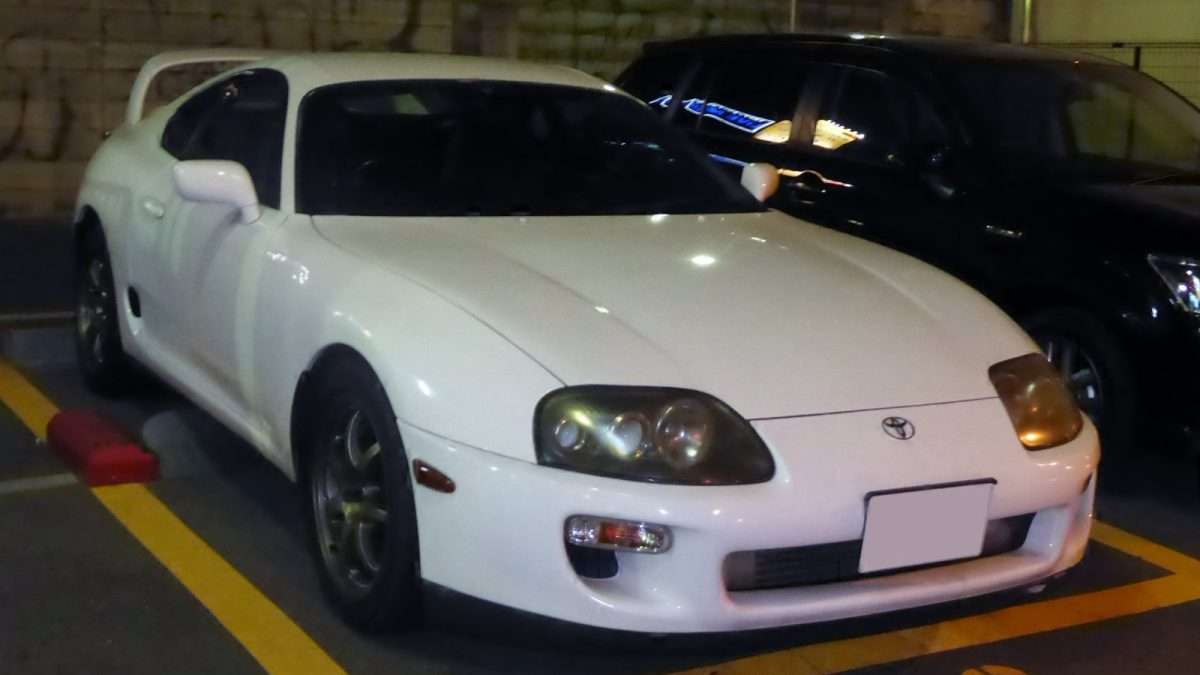 A fourth-generation (A80) Toyota Supra in Japan. Photo: Tokumeigakarinoaoshima, CC0 (Wikimedia Commons)
The hardware behind the myth
Money follows engineering, and these cars carried memorable engines. The A80 Supra Turbo used a sequentially turbocharged 3.0-liter inline-six rated at 320 horsepower and 315 lb-ft of torque, according to Car and Driver. Nissan’s RB26DETT, a 2.6-liter twin-turbo inline-six, was officially rated at 276 horsepower in the Skyline GT-R, a number that reflected a gentleman’s agreement among Japanese automakers rather than the engine’s real output. Hagerty clocked a stock R33 GT-R from zero to 60 mph in 5.6 seconds.
The NSX took a different route: a 3.0-liter V6 making 270 horsepower in early cars, enlarged to 3.2 liters and 290 horsepower for 1997. Mazda’s RX-7 relied on a twin-turbo rotary rated at 276 horsepower in the Type RS Hagerty tracked. Each engine has a character of its own, and when one wears out, the sensible replacement is the same type of engine, which is why owners often start with a used unit sourced in Japan. You can browse one dealer’s catalog of them here, organized by model and year range.
The legal clock that created the market
Most of these cars were never sold new in America, or were sold in tiny numbers. The Skyline GT-R is the clearest case. Under federal rules, a vehicle that does not meet U.S. safety standards generally cannot be imported permanently until it is old enough. The National Highway Traffic Safety Administration states that a motor vehicle at least 25 years old can be lawfully imported without regard to whether it complies with all applicable Federal Motor Vehicle Safety Standards, and that the 25 years run from the date of manufacture. U.S. Customs and Border Protection describes the same general rule: vehicles under 25 years old generally must comply with the standards to be imported permanently.
Month of manufacture matters, which is why collectors watch production calendars the way wine buyers watch vintages. Hagerty noted that the R34 Skyline GT-R, built from 1999, would begin to become legal for import on January 1, 2024. Until then, the few R34s on American soil arrived through narrow legal pathways such as the Show or Display exemption, which limits use to 2,500 miles per year. When one of those cars crossed the block on Bring a Trailer in June 2021, it sold for $320,187 including the buyer’s premium, a record for a Skyline GT-R at the time.
What the auction results actually show
Scarcity explains part of it. Pop culture explains the rest. A generation raised on Gran Turismo and the Fast and Furious films is now old enough to buy the cars whose posters once hung on bedroom walls. In May 2023, Bonhams sold the hero R34 from the fourth Fast and Furious film for $1.357 million, a public-auction record for a Skyline at that point.
The NSX shows a steadier curve. Acura listed the 1991 car at $60,600, and Hagerty’s latest valuation report puts a 1991 coupe in excellent condition at $121,000, with a record sale of $167,500 among the 307 sales in its data. The Supra market has produced louder moments: in 2022, a Turbo with a six-speed manual and 22,962 miles brought $304,750 at a Massachusetts auction of cars seized from an alleged drug dealer, about 60 percent above the price guide’s top-condition value at the time.
Not every 1990s car climbs like that. A 1999 Mazda RX-7 Type RS with 111,000 kilometers sold in October 2024 for $36,225, according to Hagerty’s records. The pattern is that condition, provenance and originality separate the cars that command premiums from the ones that simply trade.
The halo effect reaches beyond the big four. Collectors now look at the Mitsubishi 3000GT VR-4, the Toyota MR2 Turbo, the Honda Integra Type R and the Subaru Impreza WRX STI, cars that paired everyday usability with serious performance. Few of them had the power numbers of a Supra, but they share the same appeal: Japanese engineering at full speed, built in small volumes and imported to the U.S. in limited numbers.
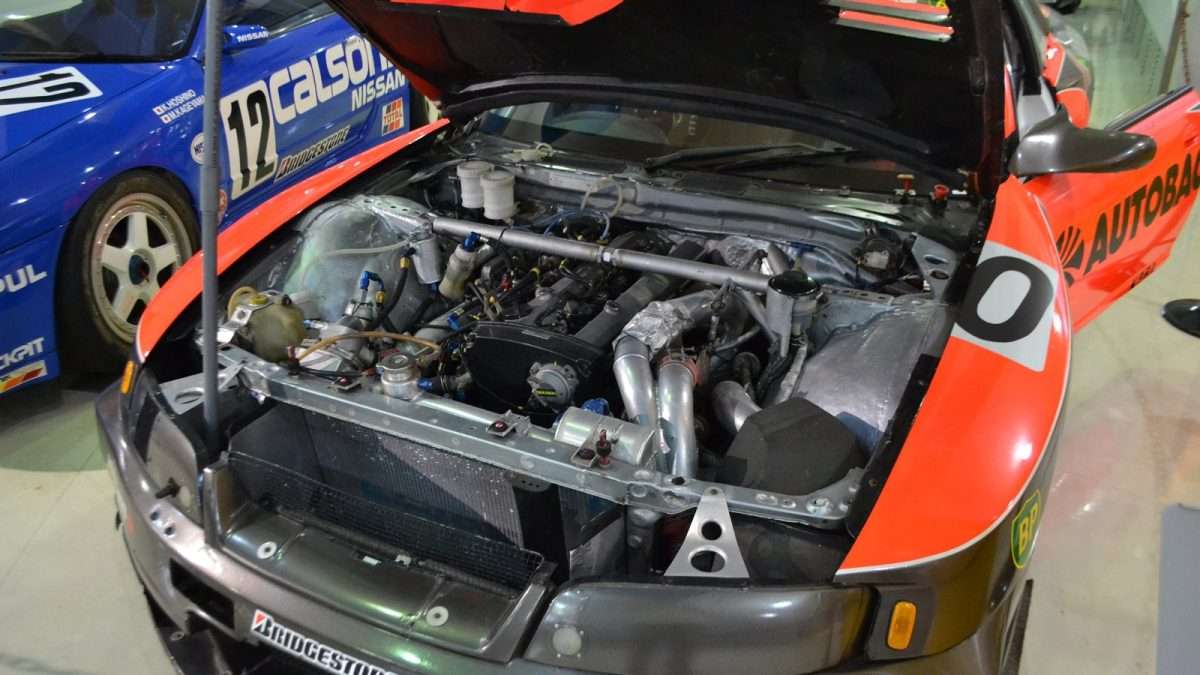 Under the hood of a race-prepared R33 Skyline GT-R on display. Photo: 先従隗始, CC0 (Wikimedia Commons)
Originality is the new currency
This is where the story turns from investing to ownership. Hagerty describes “numbers matching” as the idea that the major elements of a car, including chassis, body and engine, are the ones it left the factory with. The phrase means different things for different makes and eras, but buyers of rare cars know the logic: a car without its original engine can lose a meaningful share of its value.
Twenty-five or thirty years in, many of these engines are tired. Owners who want to stay close to stock often begin with a used engine sourced in Japan, built for the same model they own. A Skyline or RX-7 owner who stays with the same engine family and documents the choice protects what the car is.
Federal paperwork shows how seriously regulators take the same question. The EPA’s import declaration form exempts vehicles at least 21 years old in original, unmodified configuration, but says vehicles with replacement engines are not eligible unless the replacement is the same model as originally installed, or comes from a certified vehicle no older than the one being imported. The takeaway for collectors is simple: the right engine is part of the car’s identity.
What a careful owner does
Keep documentation of the original engine’s serial number, even if the block is no longer in the car. Photograph the engine bay before any work. Ask a seller for the model code and year range of any replacement, and keep the receipt with the title. If you plan to resell someday, a documented, period-correct replacement reads very differently from an unexplained swap.
The 1990s Japanese sports car boom began with a quirk of import law, was fueled by video games and film, and is now sustained by a more grown-up question: How do you keep a quarter-century-old machine honest? Buyers who ask that early tend to enjoy the cars longer and sell them for more.


